
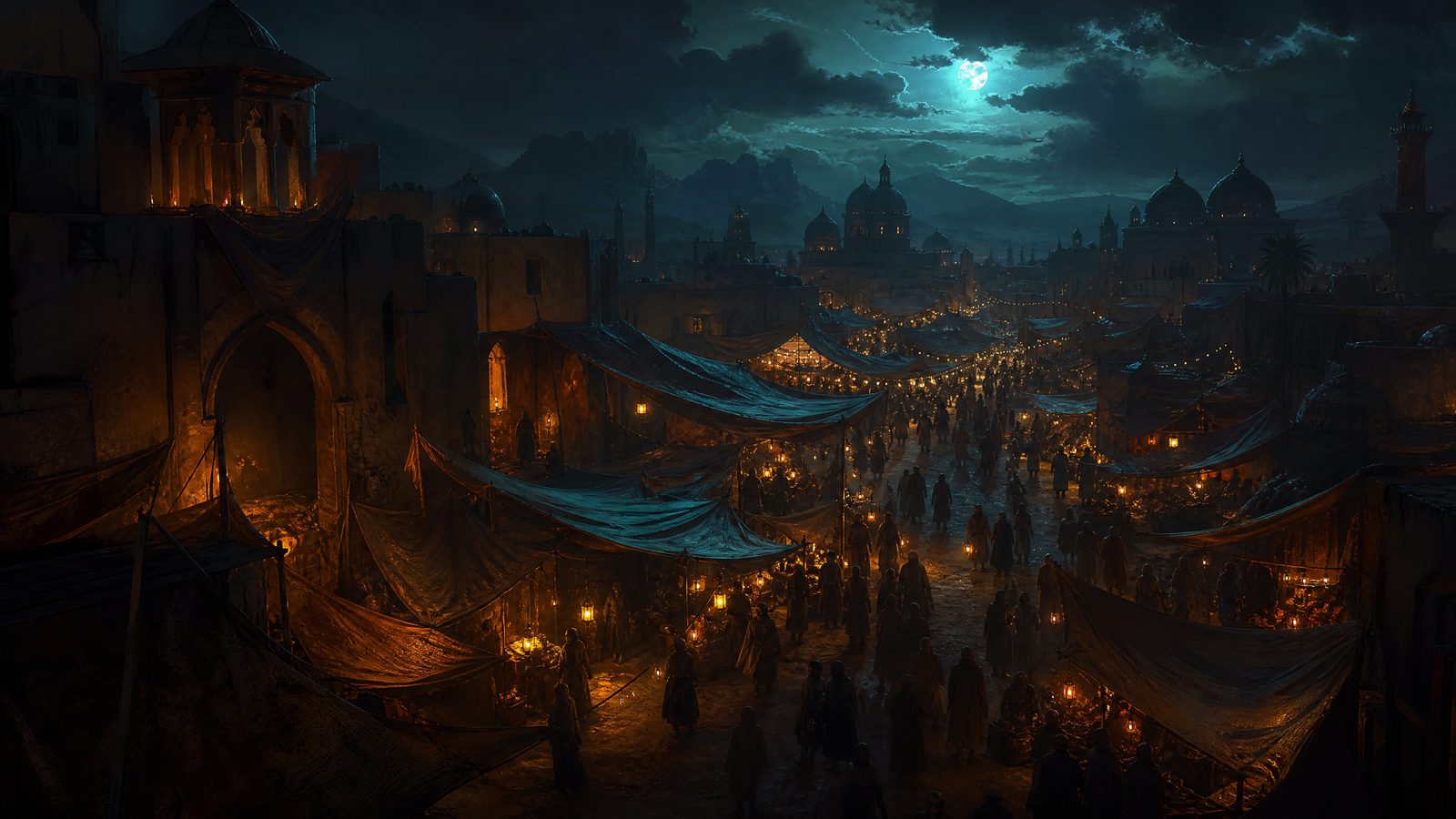
Walking through the night market in Bazaar Run is not a good feeling. Your character has a slight delay on turning, other traders slide rather than step, and if you run into a crowd you will occasionally find yourself standing somewhere you did not choose. Twenty ticks, and it shows.
None of it matters, because nothing in this game is decided by where your body is.
The right thing to be strict about
Every purchase, sale, contract and loan is resolved server-side, timestamped on arrival, and never speculated on by the client. If you and another player bid on the same crate of grain, one of you gets it and the interface tells you which within about eighty milliseconds. It does not show you owning the crate and then take it away.
Nineteen thousand four hundred logged transactions across four connection profiles including the throttled tether. Zero disputes. Not zero losses — our testers lost plenty of crates to faster traders — but zero cases where the game showed one outcome and delivered another.
| System | Authority | Speculated locally | Disputes logged |
|---|---|---|---|
| Market orders | Server | No | 0 |
| Contracts | Server | No | 0 |
| Inventory transfers | Server | No | 0 |
| Movement | Client | Yes | — |
| Cart physics | Client | Yes | — |
Six point one corrections per match, and nobody minds
Six point one visible corrections per match is nearly twice the archive median and it costs the game almost nothing in perceived quality, because eighty-eight per cent of them are movement. Being nudged sideways in a crowded market is annoying. Losing a contract you thought you had won would be intolerable, and that never happens.
Contrast Banner Fields at nineteen corrections per match, where the corrections land on the exact mechanic the game is built around. Same class of event, opposite consequence, because of where the studio chose to be authoritative.
Netcode quality is not a single number. It is whether the strictness is spent on the part of the game the player actually cares about.
What holds it back
The movement is worse than twenty ticks requires. Other games in the archive run the same rate with far better interpolation; here the character turns with a visible lag that no network condition explains and which is almost certainly a client-side animation decision. It makes the game feel cheaper than it is.
Four regions is adequate but the market is global, which means a trader on a distant region is genuinely disadvantaged in a race for a scarce contract by a hundred and fifty milliseconds of geography. The game does not mention this anywhere, and given how strict it is about transaction ordering, it should.
The one systemic worry
Because ordering is strict and the market is global, latency converts directly into economic advantage. Our host-region tester won sixty-one per cent of contested contracts against our far-region tester over four hundred attempts with matched play patterns.
That is not a bug — it is the honest consequence of strict ordering — but it is the sort of thing a game with a real economy should either equalise with a short bidding window or disclose plainly. Slipstream Nine at least tells you your round-trip time before you commit.
| Measure | Bazaar Run | Archive median |
|---|---|---|
| Tick rate | 20 Hz | 28 Hz |
| Hosting regions | 4 | 4 |
| Visible corrections per match | 6.1 | 3.6 |
| Transaction disputes | 0 | — |
| Latency shown anywhere | No | No |
The short version
- Twenty ticks on movement, full server authority on every transaction.
- Zero disputes across nineteen thousand four hundred logged trades.
- Six point one corrections per match, eighty-eight per cent of them movement.
- Turning lag is worse than the tick rate explains and is a client-side choice.
- Strict ordering plus a global market converts latency into money.
- Sixty-one per cent of contested contracts went to the nearer tester.
Verdict
Seven point nine. A game that understood which half of itself needed to be exact, got that half completely right, and left the other half loose enough to notice. The unaddressed advantage held by nearby traders is the only thing keeping it out of the eights.